The Message That Preys on Love
It starts with a simple ping. A text message from an unknown number, written with just enough urgency to bypass your critical thinking:
"Hi Mum, I dropped my phone and it’s completely broken. I’m using a friend's phone to text you. Can you save this new number? x"
To a parent, this isn't a "security threat"—it’s a child in need. But behind that message is a coordinated criminal operation designed to drain bank accounts.
At Montiguard, we’ve analyzed these interactions. Here is our investigative breakdown of the "Hi Mum/Hi Dad" scam, the psychological triggers it uses, and how you can stay safe.
How the Scam Unfolds: A Three-Step Trap
Journalistic investigation into these "impersonation scams" reveals a consistent three-phase strategy used by international crime syndicates.
1. The "Broken Phone" Hook
The attacker begins by establishing why they are using a different number. By claiming the phone is "broken" or "lost," they provide a logical reason for the unfamiliar contact details and create a sense of minor crisis.
2. The Move to Encrypted Chat
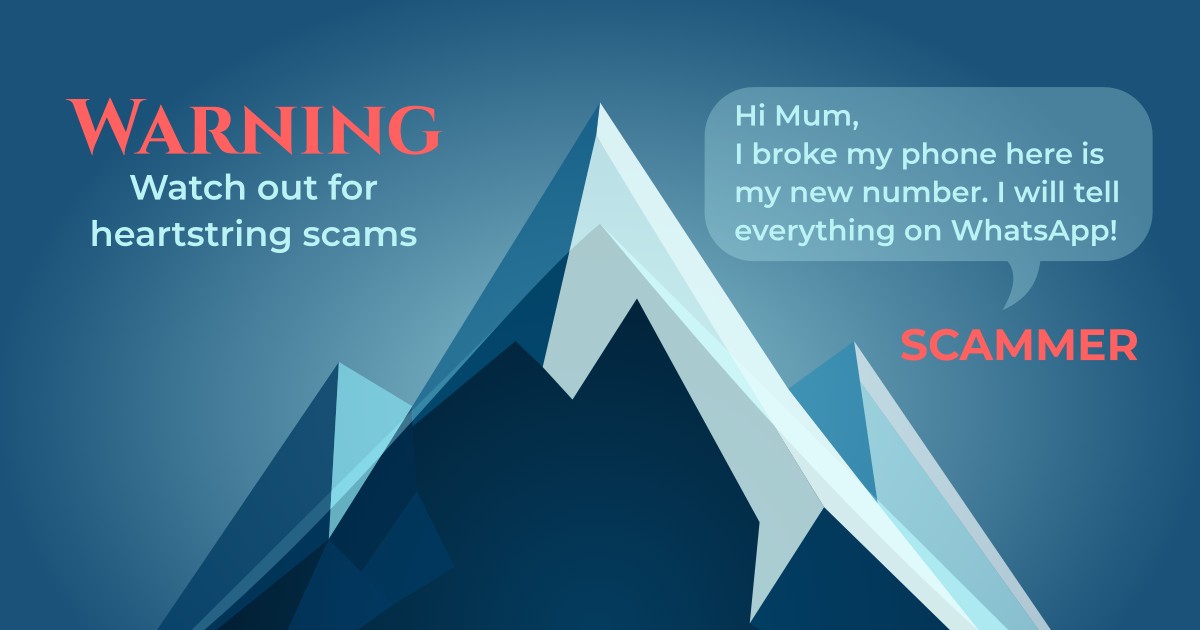
Often, once a parent replies, the scammer quickly suggests moving the conversation to WhatsApp or Telegram.
- The Reason: These platforms are encrypted, making it harder for telecommunication providers or SMS filters to track the conversation once the initial "hook" has been set.
3. The Financial "Sting"
Once the emotional connection is established, the "child" reveals a problem. Usually, it is a banking issue caused by the "new phone."
"Hey, I’m trying to pay a bill but my banking app is locked because it doesn't recognize this device. Could you please pay it for me? I’ll pay you back as soon as I’m back into my account. It’s urgent! 🥺"
Real-World Examples
Scammers often use slight variations to test which "script" converts best. Here are documented examples of these messages:
"Hi Dad, my phone is broken. This is my new number. Can you message me on WhatsApp when you see this? It's really important."
"Hey Mom, it’s me. I’m using a temporary number because mine is blocked. I have a bit of a problem and really need your help. Please text me back as soon as you can."
The Statistics: A Growing Epidemic
This isn't just a nuisance; it’s a multi-million dollar industry.
- In the UK: Action Fraud reported that "Hi Mum" scams cost victims over £1.5 million in a single year [1].
- In Australia: The ACCC’s Scamwatch reported a 2,000% increase in these specific impersonation scams, with over $7 million lost in 2022 alone [2].
- In the USA: The FTC notes that family emergency scams are among the most common forms of "vulnerability-based" fraud, often targeting the elderly [3].
Why Is This Scam So Successful?
Our investigation shows that scammers rely on Social Engineering, not just technology.
- High-Pressure Tactics: They insist the matter is "urgent," which triggers a "fight or flight" response in the parent, making them less likely to notice spelling errors or logical inconsistencies.
- Information Siphoning: Scammers often harvest names and family details from social media "data leaks" or public profiles to make their impersonation more convincing.
- The "Safety" Gap: Most people are trained to look for suspicious links. However, these scams often don't have links. They rely on a conversation, which feels more human and less "robotic."
How to Protect Your Family
Knowledge is your first line of defense, but technology is your second.
- The "Call-Back" Rule: If you receive a text like this, immediately call the "old" number of your child. If they answer, the scam is over.
- Verification Questions: Ask a question only your child would know the answer to (e.g., "What did we have for dinner last Tuesday?").
- Check for Urgency: Be wary of any request for money via bank transfer or "instant" payment methods.
- Use AI Filtering: Tools like Montiguard are specifically designed to detect the linguistic patterns used in these scams. By using AI to analyze the "intent" of a message rather than just looking for bad links, we can stop the "Hi Mum" message before it ever reaches your inbox.
Conclusion
The "Hi Mum" scam works because it exploits the best part of human nature: our desire to help the people we love. By staying informed and using modern filtering tools, we can ensure that a scammer never stands between you and your family.
Sources & References
- Action Fraud (UK): Warning over 'Hi Mum' and 'Hi Dad' WhatsApp scams
- ACCC Scamwatch (Australia): Scamwatch warns of 'Hi Mum' scams
- Federal Trade Commission (USA): Family Emergency Scams
- National Cyber Security Centre (NCSC): Phishing and SMS Scams Guidance